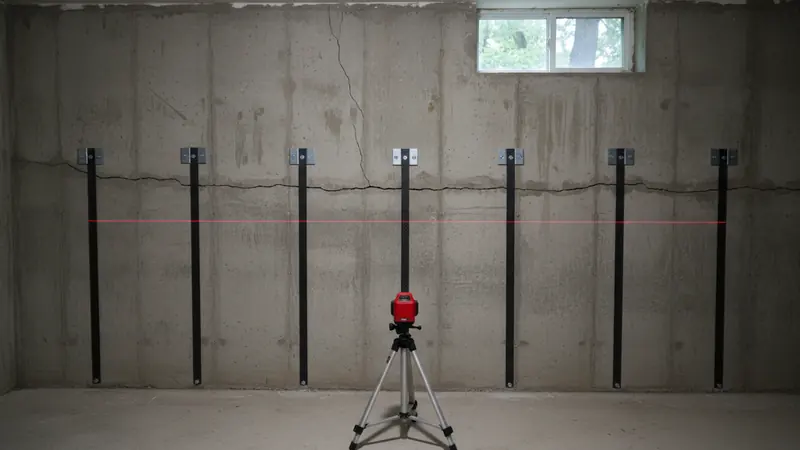
What you can fix with a crack repair, how concrete differs from older masonry, and what to settle before accepting a quote.
Find out what cracked before choosing a filler
Start by asking what failed. Ask the person examining the wall what it is made of. Does it support the house? Does the crack pass through the wall or follow mortar joints? Note where water appears. Photograph the crack before anyone covers it.
A crack's shape alone does not tell you what caused it. The National Park Service lists several causes in brick masonry. These include uneven foundation settlement, temperature and moisture changes, corroding embedded metal, and walls that bulge or lean. Its guidance puts structural repairs before cosmetic work. Ask why filling the visible opening will fix the problem they have identified.
If the wall bows, leans, or seems to be changing, ask a structural engineer to assess it. Do this before agreeing to a cosmetic patch. Ask for written findings that explain what needs repair. What still needs looking into? Should you watch the wall for further movement? We found no Howard County homeowner standard that says a crack is harmless just because it is below a particular width.
Source: National Park Service, Common Problems with Brick Masonry, published 2008, updated 2018-06-29; technical guidance, no regulatory effective date. Questions above apply that guidance to a repair estimate. Gathered 2026-09-23.
What concrete crack repair actually involves
With concrete, the key question is whether the crack still moves. National Park Service guidance describes epoxy injection as a way to restore strength across a crack that no longer moves. The crew seals the crack's exposed faces. They inject epoxy through holes or ports. Once it hardens, they may remove the temporary surface seal. A smear over the wall is not the same process.
If a crack moves as loads or temperatures change, the repair needs to allow for that movement. Flexible sealants can stick to the crack's sides. They can expand or compress as it moves. So “seal the leak” and “bond the concrete” are different promises. Ask which promise the contractor is making. Ask what evidence supports their choice of method.
The same guidance warns that epoxy residue can stay visible on exposed historic concrete. Routed sealant repairs can too. Ask what the finished wall will look like. Will the ports remain? How will the crew finish the surface? You can use these federal repair principles to ask questions. They do not approve a particular product for your Howard County wall.
Source: National Park Service, Preservation Brief 15: Preservation of Historic Concrete, published 2007, “Crack Repair”; technical guidance, no regulatory effective date. Gathered 2026-09-23.
Older Ellicott City foundations need compatible mortar
Ellicott City's historic district guidelines describe granite foundations as part of the area's masonry heritage. A quote to “fill all cracks with cement” leaves a key question unanswered. Does the repair material suit your existing stone and mortar?
The guidelines favour repairing masonry. They say to keep sound mortar. Replace deteriorated mortar with a compatible mix. They discourage changing joint widths or covering original masonry. They also show how inflexible mortar can help joints reopen and brick edges chip as temperatures change. Ask the mason to name the proposed mix. Ask how the joints will match your existing wall.
For historic review generally, see the county page. For your repair, the method matters. The district guidelines distinguish minor spot pointing with matching mortar from broader masonry repairs that need review. They call for a detailed description of the proposed method. Ask preservation staff which applies before the crew removes mortar or coats the foundation. These district guidelines do not give you a countywide mortar recipe for every concrete-block basement.
Source: Howard County Historic District Commission, Ellicott City Historic District Design Guidelines, masonry guidance, adopted 1998-05-07; Howard County DPZ, Historic Preservation Commission, current guidance linking that document, undated. Gathered 2026-09-23.
A sealed crack does not establish flood protection
If water alerted you to the crack, describe what happened before accepting a promise of a dry basement. Did water seep along the crack, enter at an opening, or rise across the floor? Give the contractor photographs. Explain what you saw in the order it happened. Ask which entry paths the proposed work covers.
Howard County's published Flood Mitigation Plan treats sealing, drainage, and strengthening walls against water pressure as separate measures. It also points out the limits of dry floodproofing for basements. This is an older planning document. But the distinction helps when you read a crack-repair quote. Stopping seepage through a repaired opening does not prove that the building can resist flooding.
If your house has flooded before, ask the designer what the crack repair will achieve under those conditions. Keep any broader flood-protection claim separate. Ask for its own supporting design. See the county page for floodplain permit requirements. Ask for the crack-repair warranty to spell out its limits. You should not have to guess them from the word “waterproof.”
Source: Howard County Department of Public Works, Bureau of Environmental Services, Flood Mitigation Plan, dated 2010-09-06, “Dry and Wet Flood-proofing”; used for technical context, not current permit rules. Gathered 2026-09-23.
What can make a patch fail again
A repair depends on the surface beneath it. It also has to cope with movement. The General Services Administration's concrete repair procedure says to remove unsound material and contaminants that could weaken the bond. It also says patching compounds should not bridge working cracks or joints. So ask for more detail than a product name.
Ask how the crew will prepare the crack. How will they deal with an earlier failed patch? How will they follow the chosen material's instructions? If they uncover damaged concrete or exposed reinforcing steel, settle who assesses it before they close the area. Ask what weather or moisture conditions would delay the work. Ask when finishes can go back over it.
GSA's procedure also calls for photographs before, during, and after repairs. It asks for records of materials and ongoing care too. Ask for those records for your house. The federal procedure concerns historic concrete. It requires professional judgement for each project. Its specifications are not automatic Howard County residential requirements.
Source: U.S. General Services Administration, Concrete Patching Compound, modified 2026-06-11; reference procedure, no local regulatory effective date. Gathered 2026-09-23.
What the quote should cost and cover
We could not verify a Howard County installed price from primary sources, whether per crack or by length. We cannot give you a reliable local price range. See the county page for permit charges. Those do not tell you what the repair itself costs.
Ask each contractor to mark the cracks included in their proposal. Ask them to price the same finished work so you can compare quotes. Settle how they will get through finished basement walls. Agree on the repair material. Settle who cleans up the surface. Agree on how finishes will be restored. If the contractor also proposes structural work, ask them to describe that work separately. Ask for a separate price so you can see what each part buys.
Maryland requires home-improvement contracts to describe the work and materials. Make sure you can use that description to identify the repaired areas later. Read the warranty alongside it. Does it cover renewed leakage, further movement, or only the material? Who pays to reopen drywall if the repair needs attention? These are questions you can ask about the contract. We are not saying Maryland requires those warranty terms. Settle the answers before signing.
Source: Maryland Department of Labor, Maryland Home Improvement Commission, Maryland Home Improvement Contracts, undated current guidance; effective date not stated. No county-specific installed-price figure verified in the primary sources reviewed. Gathered 2026-09-23.